“ I heard IUL policies can collapse after 15–20 years… is that true?”
This is one of the most common questions I get.
And to be honest —
👉 it’s a fair question.
Because the answer is:
Yes, an IUL policy can fail.
But not for the reasons most people think.
Let’s Address This Honestly First
IUL is not a “magic product.”
It is a structure.
And like any structure:
👉 If it’s designed poorly, it will not hold up over time.
So What Does “Failure” Actually Look Like?
When an IUL policy fails, it typically means:
- The policy value is insufficient
- Insurance charges continue increasing
- The policy eventually lapses
In some cases:
👉 The client may even need to inject additional premiums later on
Which is exactly what no one wants.
Why This Happens (The Real Reasons)
From what I’ve seen over the years, failure usually comes down to how the policy was structured at the start.
1. Underfunding the Policy
This is probably the biggest issue.
The policy is set up with:
- Minimum or near-minimum premiums
- Not enough early capital
Which creates a weak foundation.
👉 Think of it like this:
You’re trying to build a long-term structure
…without enough upfront support.
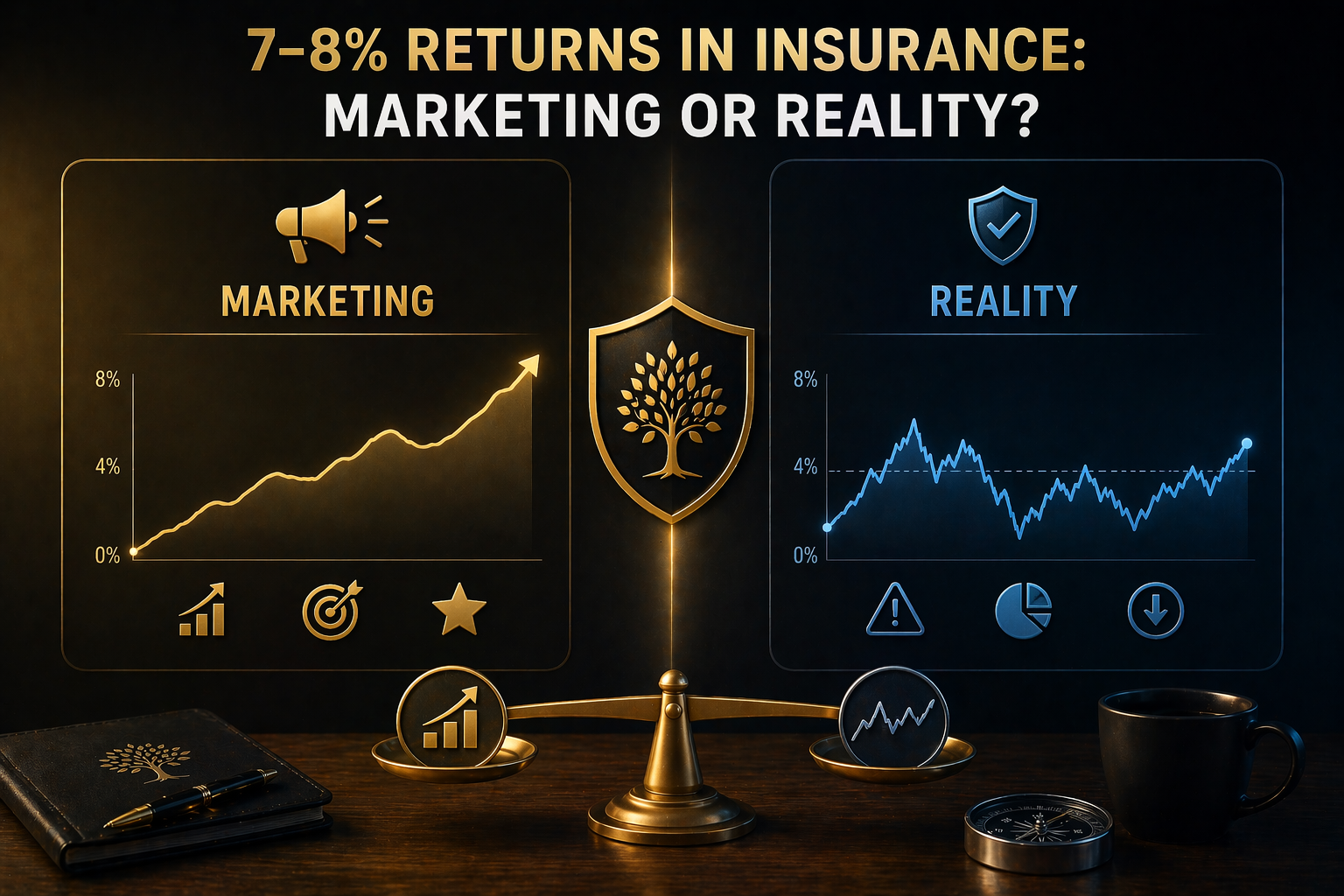
2. Overly Optimistic Projections
This is where things get more subtle.
Policies are sometimes illustrated at:
- 7%
- 7.5%
- Even higher
And while these numbers may look attractive…
👉 they are not guaranteed.
So what happens?
- Client expects strong growth
- Actual returns come in lower
- The gap widens over time
3. Rising Cost of Insurance
This is built into how IUL works.
As the insured gets older:
- The cost of insurance increases
- Charges become higher
If the policy value hasn’t grown sufficiently…
👉 it starts eating into the balance.
4. Lack of Ongoing Review
This is something many people don’t realise.
IUL is not a “set and forget” structure.
Over time:
- Market conditions change
- Policy performance varies
- Adjustments may be needed
Without proper review…
👉 small issues compound into bigger ones.
So Is IUL the Problem?
Not really.
👉 The issue is usually not the product.
👉 It’s the way it was set up.
What a Properly Structured IUL Looks Like
When designed correctly, the approach is very different.
1. Strong Early Funding
Instead of minimising premiums:
👉 The policy is funded more robustly upfront
This creates:
- A stronger base
- More buffer against volatility
- Better long-term sustainability
2. Conservative Assumptions
Instead of chasing high illustrations:
👉 The policy is stress-tested at lower return assumptions (e.g. 5–6%)
This ensures:
- More realistic expectations
- Greater resilience
3. Designed for Longevity
The focus shifts from:
- “What looks good on paper”
To:
👉 “What holds up over 20–30 years”
4. Ongoing Monitoring
A good IUL strategy includes:
- Periodic reviews
- Adjustments where necessary
- Clear understanding of performance
A Different Way to Look at It
Sometimes I explain it this way:
👉 A poorly structured IUL behaves like a liability
👉 A properly structured IUL behaves like an asset
Same product. Completely different outcome.
Why This Matters More Today
In today’s environment:
- Markets are more volatile
- Assumptions matter more
- Clients are more informed
Which means:
👉 Structure matters more than ever.
Where I See Clients Get Caught
Occasionally, clients come in with policies that were:
- Designed to “look good” initially
- Based on optimistic projections
- Not stress-tested properly
And by the time they realise something is off…
👉 the structure is already difficult to unwind.
So What Should You Focus On?
Instead of asking:
“Is IUL good or bad?”
A better question is:
- How is this policy funded?
- What assumptions are being used?
- What happens if returns are lower than expected?
- Has this been stress-tested?
Because Ultimately…
IUL doesn’t fail overnight.
👉 It fails slowly — through small gaps that build over time.
Final Thought
There’s nothing wrong with using IUL as part of a long-term strategy.
But it requires:
👉 Proper design
👉 Realistic expectations
👉 Ongoing understanding
The product isn’t the risk.
The structure is.
If you currently hold an IUL policy — or are considering one — it may be worth reviewing how it has been structured and whether it is designed to hold up over the long term.
👉 If you’d like a second opinion on your current policy or structure, feel free to reach out via WhatsApp