Over the years, I’ve sat across many policy reviews.
Some were well thought through.
Some… less so.
And after seeing enough cases, a pattern becomes quite clear.
👉 The biggest mistake isn’t the product.
👉 It’s how the product is positioned.
What Usually Happens
In many conversations, IUL is presented like this:
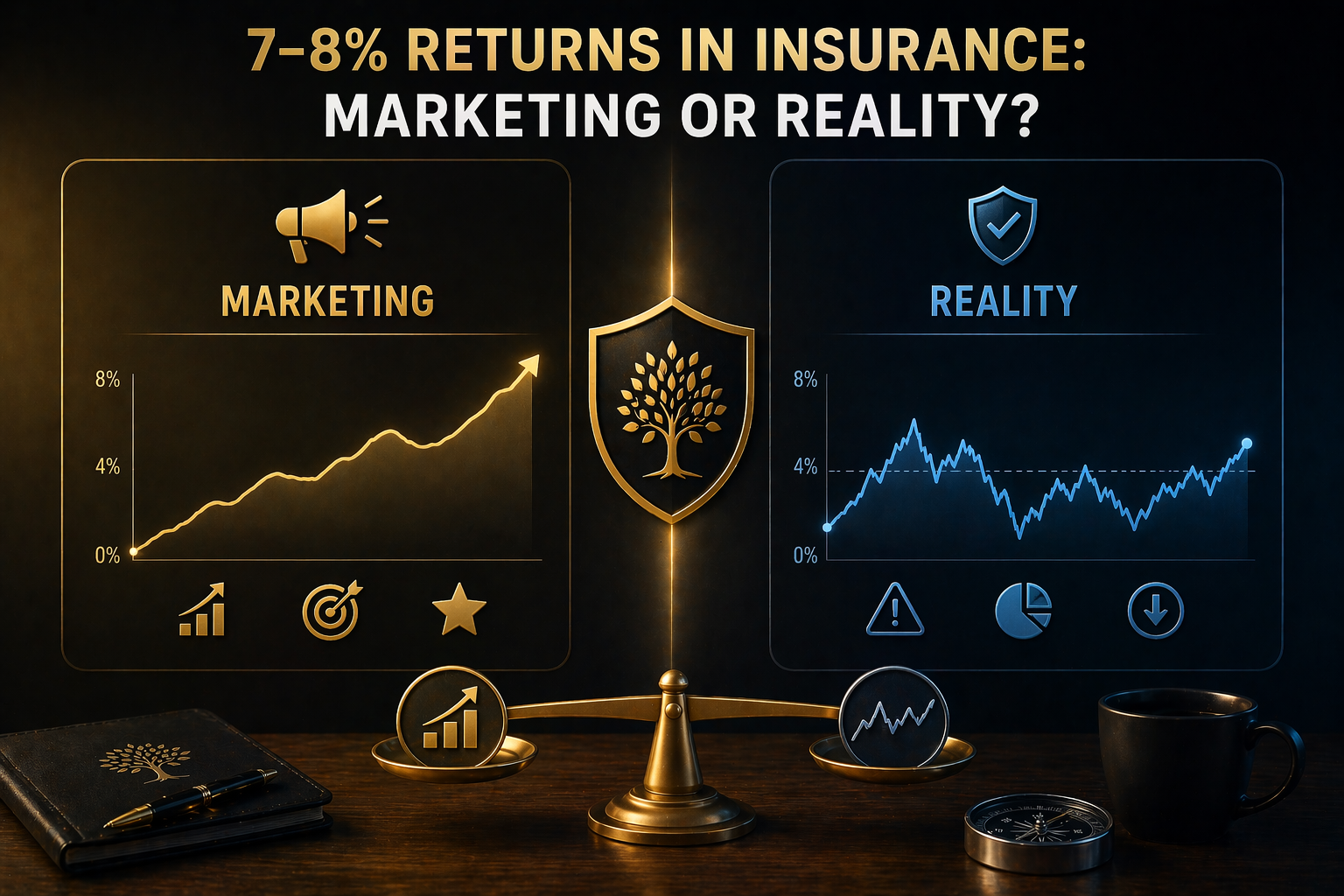
- “It can give you around 7–8%”
- “It’s better than traditional policies”
- “It gives you growth with protection”
And while none of these are entirely wrong…
👉 they’re not the full picture either.
The Problem with Selling Based on Returns
When a product is positioned around returns:
👉 Clients anchor on that number.
So over time:
- Expectations are set
- Comparisons are made
- Decisions are based on performance assumptions
And when reality doesn match those expectations…
👉 trust starts to erode.
What Gets Missed Instead
The real strength of IUL is not:
👉 The projected return
It’s:
👉 The structure
Because IUL Is Not an Investment
This is something I often need to clarify.
It’s not meant to:
- Beat the market
- Compete with direct investments
Instead, it’s designed to:
👉 Sit within a broader strategy
👉 Provide a specific function
👉 Work alongside other assets
So What Should Advisors Focus On?
From what I’ve seen, stronger conversations tend to revolve around:
1. Purpose, Not Performance
Instead of:
“What return does this give?”
A better question is:
“What role does this play in your overall plan?”
2. Structure, Not Illustration
Illustrations are helpful.
But they are still:
👉 projections
What matters more is:
- How the policy is funded
- How it behaves under different conditions
- Whether it holds up over time
3. Expectations, Not Assumptions
Clients don’t need:
👉 perfect scenarios
They need:
👉 realistic ones
A Pattern I’ve Noticed
When IUL is sold as:
👉 A return-generating product
It tends to:
- Be compared aggressively
- Be questioned more often
- Lead to dissatisfaction
When it’s positioned as:
👉 A strategic tool within a broader plan
It tends to:
- Be better understood
- Be more stable over time
- Deliver outcomes closer to expectations
Why This Matters for Clients
Because the way something is explained at the start…
👉 shapes how it’s experienced later.
And in long-term planning:
👉 expectation gaps are often where problems begin.
Why This Matters for Advisors Too
This is something not often talked about openly.
But over time:
👉 the way you position products defines your career.
Advisors who focus on:
- Short-term appeal
- Higher projections
- Competitive selling
…may get faster results initially.
But advisors who focus on:
- Structure
- Clarity
- Long-term thinking
👉 tend to build stronger, more sustainable practices.
A More Honest Way to Approach It
Sometimes the conversation needs to sound like this:
“This is not the highest returning option.
But it plays a specific role in your overall structure.”
It may not be the easiest sell.
But it’s usually the more accurate one.
Because Ultimately…
Clients don’t remember:
👉 the illustration
They remember:
👉 whether the outcome matched what they understood.
Final Thought
IUL is a useful tool.
But like any tool:
👉 Its value depends on how it’s used —
and how it’s explained.
And in most cases,
the difference isn’t the product.
It’s the conversation around it.
If you’ve been presented with an IUL policy primarily based on projected returns, it may be worth revisiting how it fits into your broader financial strategy.
👉 If you’d like a clearer breakdown of how your policy has been structured — and whether it aligns with your long-term goals — feel free to reach out via WhatsApp